
 Important: See Edit a Template's Attribute Settings for instructions on how to format an Attribute.
Attributes can look different depending on how they are formatted. For each Value and Weighted Score Attribute, you can decide whether it will be:
- A dropdown
- Checkboxes
- A radio button
- Buttons
Prior to our 3.1.0 Release, the only option for displaying Attributes was a dropdown. Having additional formatting options gives you more freedom when designing a User’s experience in an Item.

Image of a Create Screen with two Attributes: one is formatted as a radio button and one is formatted as checkboxes
Formatting Attributes as checkboxes, radio buttons, or buttons is a powerful tool to customize Templates, increase visibility of Attribute Values, and create unique experiences for your Users. Plus, they look great.
Checkboxes
Why are they beneficial?
- Checkboxes allow you to simulate a checklist experience, making it easy to see which prompts have been completed and which have not.
- Checkboxes display all potential responses to the Attribute on the screen simultaneously.
- Checkboxes act as a natural visual cue for a User to work through the list and respond to each Attribute.
Example
Below is an example of the Details Panel on a 5S Audit Template. Checkboxes are used to indicate whether each criterion has been completed properly.

Radio Buttons
Why are they beneficial?
- Radio buttons display all potential responses to an Attribute on the screen simultaneously.
- Radio buttons are always single-select, making them a natural indicator that the User should make only one selection.
Example
Below is an example of what a Panel on a project Template could look like using radio buttons.
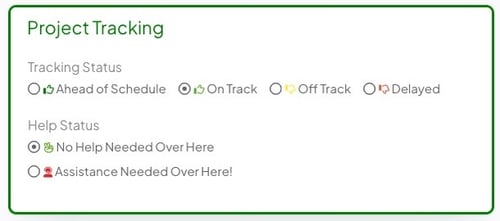
If the project ever goes off-track or the help status changes, the team has a visual prompt in the Item to change the Attribute selection when necessary.
Buttons
Why are they beneficial?
- Buttons keep the available Values visible without opening a dropdown.
- A selected button uses the Attribute Value's color, making the current selection easy to see.
Example
Below is an example of a Health Attribute formatted as buttons on a project.
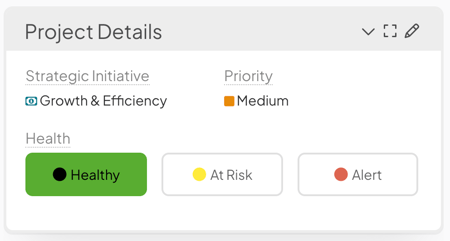
The large, green button makes it easy to see the project is healthy.